Quick answer
Surya Arghya mantra in Sanskrit with transliteration and meaning, the method to offer water to the Sun at sunrise, and how it fits Chhath Puja and daily Surya puja.
Who is in this story
The story
Offering water to the Sun, called Surya Arghya, is one of the oldest daily practices in Hindu worship, and it is the central act of Chhath Puja on 15 and 16 November 2026. This guide gives the main Surya Arghya mantra in Sanskrit with transliteration and meaning, a few shorter mantras, and a simple step-by-step method for offering water at sunrise, at home or at the ghat.
Surya Arghya mantra in Sanskrit with meaning
The most widely used verse for offering Arghya is:
एहि सूर्य सहस्रांशो तेजोराशे जगत्पते ।
अनुकम्पय मां भक्त्या गृहाणार्घ्यं दिवाकर ॥
Ehi Surya sahasramsho tejorashe jagatpate,
anukampaya mam bhaktya grihanarghyam Divakara.
Meaning: “Come, O Surya of a thousand rays, mass of radiance, lord of the world. Be gracious to me and accept this Arghya offered with devotion, O maker of the day.”
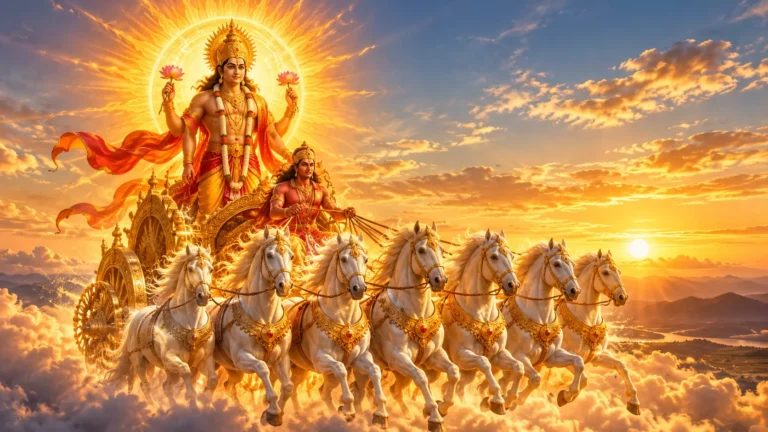
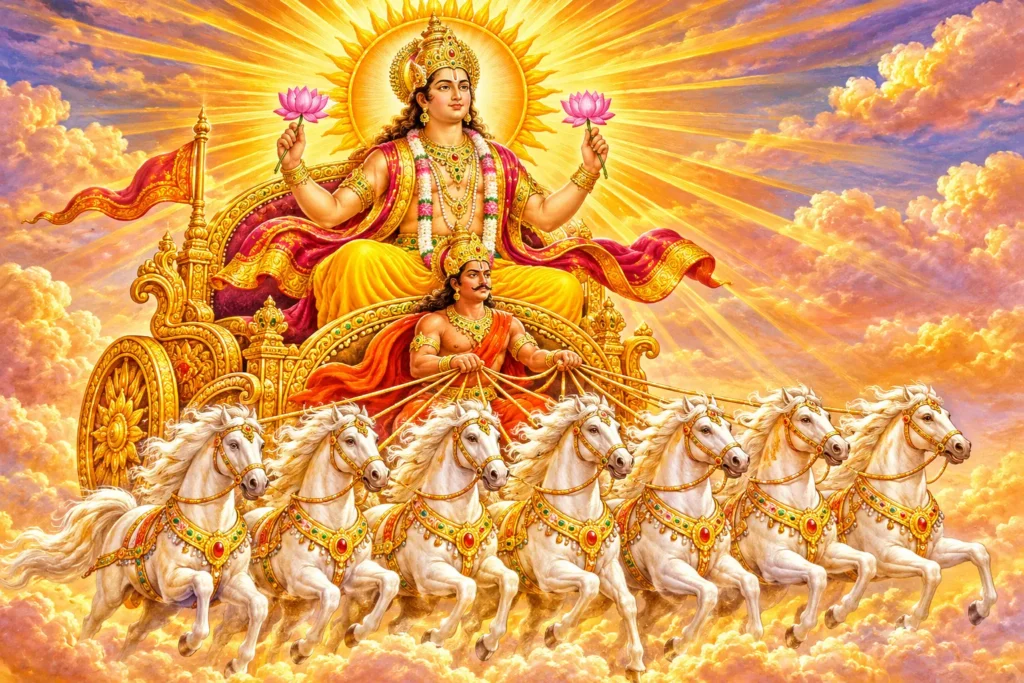
The verse addresses Surya as the lord of light and life, asks for his grace and presents the water as an offering of devotion.
Shorter Surya mantras
- ॐ सूर्याय नमः (Om Suryaya Namah): “Salutations to Surya.” The simplest mantra, suitable for anyone.
- ॐ घृणिः सूर्याय नमः (Om Ghrinih Suryaya Namah): a well-known mantra of the Sun’s radiance, often chanted at the moment of offering.
- Surya Gayatri: ॐ भास्कराय विद्महे दिवाकराय धीमहि । तन्नः सूर्यः प्रचोदयात् ॥ “We meditate on Bhaskara, the maker of light; may Surya inspire us.”
Some traditions also chant the twelve names of Surya, such as Mitra, Ravi, Bhanu and Aditya, with the Surya Namaskar.
Aditya Hridayam in the Ramayana
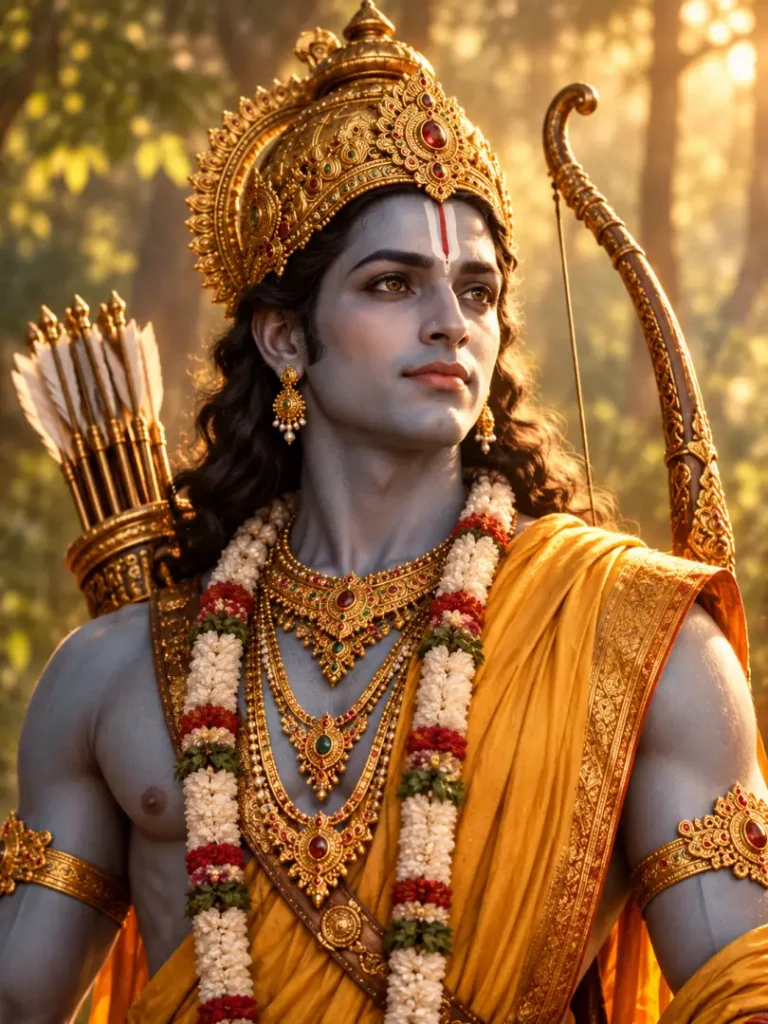
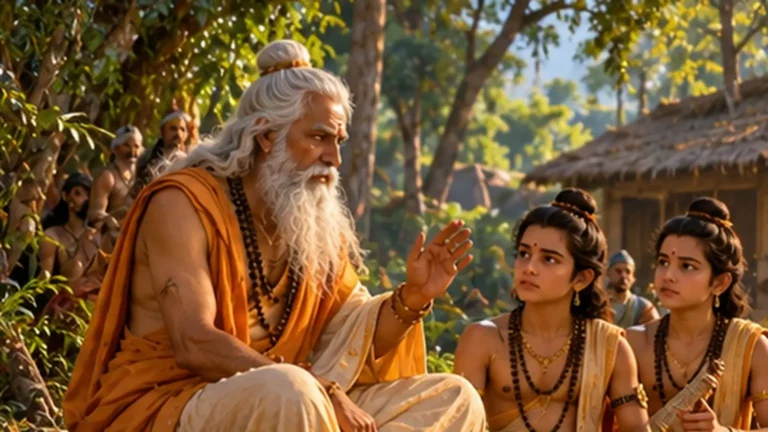
The best-known hymn to the Sun in the epics is the Aditya Hridayam. In the Yuddha Kanda of the Valmiki Ramayana, the sage Agastya teaches it to Rama on the battlefield before his final fight with Ravana, and Rama recites it with calm focus. Many people read it on Sundays or at sunrise.
Surya Arghya vidhi: how to offer water
- Choose the time. Offer Arghya in the first hour after sunrise, when the Sun is gentle. For Chhath, offer it at sunset on 15 November and at sunrise on 16 November.
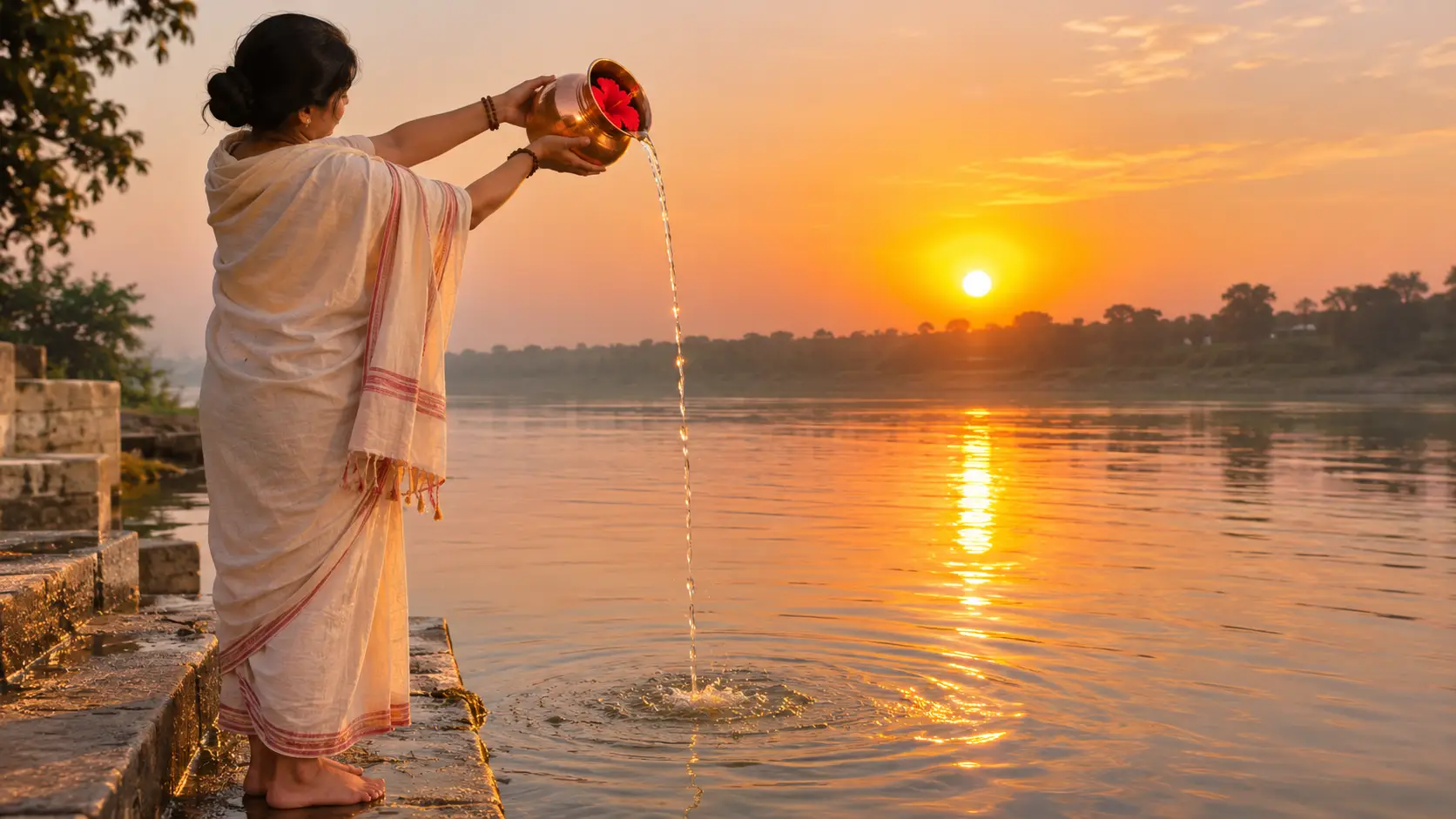
- Prepare the vessel. Fill a copper lota or kalash with clean water. Add a few red flower petals, a pinch of rice and a little roli or kumkum.
- Face the Sun. Stand facing east in the morning, barefoot and on a clean spot. Hold the vessel with both hands at chest or forehead level.
- Chant. Recite the Arghya mantra, or at least Om Suryaya Namah, with a calm mind.
- Pour slowly. Let the water fall in a thin stream into a plate, tray or plant pot so that it is not stepped on. In tradition, the offering is made as the Sun is seen through the falling stream.
- Close with a bow. Turn once clockwise on the spot, fold your hands and bow. Let the water you collected go to a plant.
A note on safety
Do not stare directly at the Sun, because it can damage the eyes. Look at the Sun only through the falling stream of water, or lower your gaze and offer with a sense of gratitude. This holds equally at the Chhath ghat, where the Arghya is offered at the horizon, soon after sunrise or before sunset.
Surya Arghya in Chhath Puja
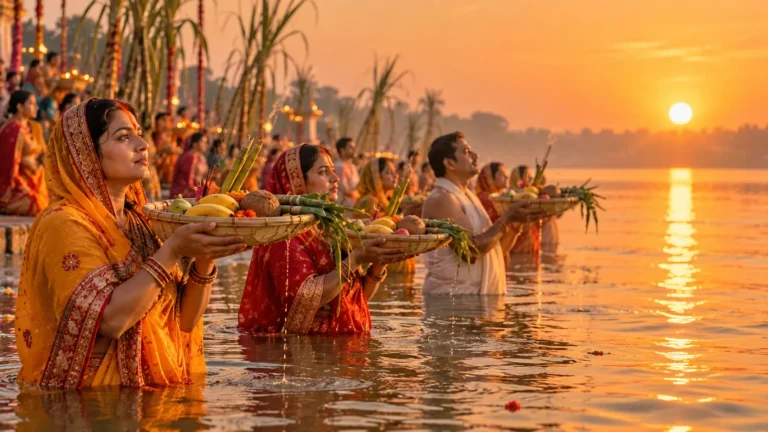
In Chhath, the vratin stands in a river or pond and offers milk and water to the setting and rising Sun with the bamboo soop in hand, praying for the family. The mantras above can be recited softly. For the full order of the four days, read the Chhath Puja 2026 guide, and see the Chhath Puja page for dates.
Frequently asked questions
What is the Surya Arghya mantra?
The most common is Ehi Surya sahasramsho tejorashe jagatpate, anukampaya mam bhaktya grihanarghyam Divakara, which asks Surya to accept the offering with grace.
What is the best time to offer Arghya to Surya?
In the first hour after sunrise, and in Chhath at sunset on 15 November and sunrise on 16 November 2026.
Can you look directly at the Sun while offering Arghya?
No. Look at the Sun only through the falling stream of water, or lower your gaze, since staring at the Sun can harm the eyes.
Sources and further reading
Read our editorial policy on how scripture, Purana and folk tradition are labelled.