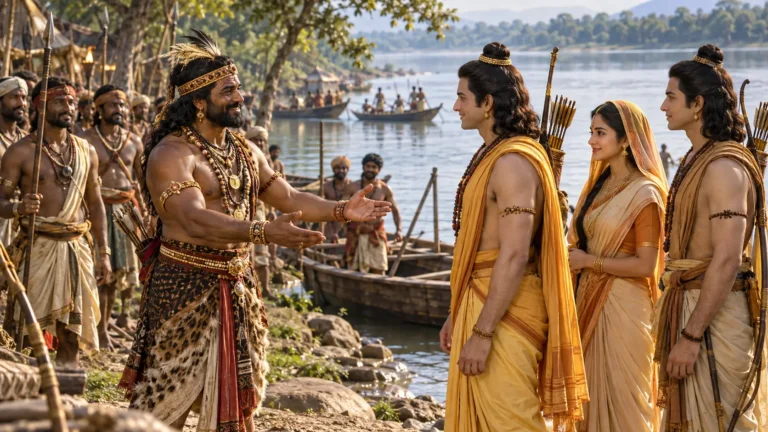
ततो निविष्टां ध्वजिनीं गङ्गामन्वाश्रितां नदीम् ।
निषादराजो दृष्ट्वैव ज्ञातीन्सन्त्वरितोऽऽब्रवीत् ॥
tato niviṣṭāṃ dhvajinīṃ gaṅgāmanvāśritāṃ nadīm |
niṣādarājo dṛṣṭvaiva jñātīnsantvarito''bravīt ||
हिंदी अर्थगंगा के किनारे ठहरी ध्वजों वाली सेना को देखकर निषादराज ने तुरंत अपने बंधुओं से कहा:
English meaningSeeing the army with its banners camped along the Ganga, the king of the Nishadas quickly said to his kinsmen:
महतीयमितस्सेना सागराभा प्रदृश्यते ।
नास्यान्तमधिगच्छामि मनसापि विचिन्तयन् ॥
mahatīyamitassenā sāgarābhā pradṛśyate |
nāsyāntamadhigacchāmi manasāpi vicintayan ||
हिंदी अर्थउधर यह विशाल सेना सागर जैसी दिखती है। मन से सोचकर भी मैं इसका अंत नहीं पा सकता।
English meaningThis great army over there looks like the ocean. Even thinking about it in my mind, I cannot find its end.
यथा तु खलु दुर्बुद्धिर्भरत स्स्वयमागतः ।
स एष हि महाकायः कोविदारध्वजो रथे ॥
yathā tu khalu durbuddhirbharata ssvayamāgataḥ |
sa eṣa hi mahākāyaḥ kovidāradhvajo rathe ||
हिंदी अर्थनिश्चय ही दुर्बुद्धि भरत स्वयं आया है; वह रथ पर विशाल कोविदार ध्वज है।
English meaningSurely evil minded Bharata has come himself; there is the huge kovidara banner on the chariot.
बन्धयिष्यति वा दाशानथवाऽस्मान्वधिष्यति ।
अथ दाशरथिं रामं पित्रा राज्याद्विवासितम् ।
सम्पन्नां श्रियमन्विच्छन्स्तस्य राज्ञ स्सुदुर्लभाम् ।
भरतः कैकयीपुत्रो हन्तुं समधिगच्छति ॥
bandhayiṣyati vā dāśānathavā'smānvadhiṣyati |
atha dāśarathiṃ rāmaṃ pitrā rājyādvivāsitam |
sampannāṃ śriyamanvicchanstasya rājña ssudurlabhām |
bharataḥ kaikayīputro hantuṃ samadhigacchati ||
हिंदी अर्थवह मछुआरों को बाँधेगा या हमें मारेगा, या फिर कैकेयी पुत्र भरत अत्यंत दुर्लभ पूर्ण राजलक्ष्मी चाहकर पिता द्वारा राज्य से निर्वासित दशरथ पुत्र राम को मारने आया है।
English meaningHe will bind the fishermen or kill us, or else Bharata, son of Kaikeyi, seeking the full royal fortune so hard to win, has come to kill Rama, son of Dasharatha, exiled from the kingdom by his father.
भर्ताचैव सखाचैव रामो दाशरथिर्मम ।
तस्यार्थकामास्सन्नद्धा गङ्गाऽनूपे प्रतिष्ठत ॥
bhartācaiva sakhācaiva rāmo dāśarathirmama |
tasyārthakāmāssannaddhā gaṅgā'nūpe pratiṣṭhata ||
हिंदी अर्थदशरथ पुत्र राम मेरे स्वामी और मित्र हैं। उनका हित चाहते हुए गंगा के तट पर हथियार लेकर डटे रहो।
English meaningRama, son of Dasharatha, is my master and my friend. Stand armed on the Ganga's banks, wishing to serve his cause.
तिष्ठन्तु सर्वे दाशाश्च गङ्गामन्वाश्रिता नदीम् ।
बलयुक्ता नदीरक्षा मांसमूलफलाशनाः ॥
tiṣṭhantu sarve dāśāśca gaṅgāmanvāśritā nadīm |
balayuktā nadīrakṣā māṃsamūlaphalāśanāḥ ||
हिंदी अर्थसब मछुआरे गंगा के किनारे सेना सहित नदी रक्षक बनकर, मांस, कंद और फल खाकर डटे रहें।
English meaningLet all the fishermen stand by the Ganga as river guards, with their forces, living on meat, roots and fruits.
नावां शतानां पञ्चानां कैवर्तानां शतं शतम् ।
सन्नद्धानां तथा यूनां तिष्ठन्त्वित्यभ्यचोदयत् ॥
nāvāṃ śatānāṃ pañcānāṃ kaivartānāṃ śataṃ śatam |
sannaddhānāṃ tathā yūnāṃ tiṣṭhantvityabhyacodayat ||
हिंदी अर्थपाँच सौ नावें तैयार रहें, हर एक में सौ हथियारबंद युवा मछुआरे, उन्होंने आज्ञा दी।
English meaningLet five hundred boats stand ready, each with a hundred armed young fishermen, he ordered.
यदाऽऽदुष्टस्तु भरतो रामस्येह भविष्यति ।
सेयं स्वस्तिमती सेना गङ्गामद्य तरिष्यति ॥
yadā''duṣṭastu bharato rāmasyeha bhaviṣyati |
seyaṃ svastimatī senā gaṅgāmadya tariṣyati ||
हिंदी अर्थकेवल यदि भरत यहाँ राम के प्रति दुर्भावना न रखते हों, तभी यह सेना आज सुरक्षित गंगा पार करेगी।
English meaningOnly if Bharata here is not hostile to Rama will this army cross the Ganga safely today.
इत्युक्त्वोपायनं गृह्य मत्स्यमांसमधूनि च ।
अभिचक्राम भरतं निषादाधिपतिर्गुहः ॥
ityuktvopāyanaṃ gṛhya matsyamāṃsamadhūni ca |
abhicakrāma bharataṃ niṣādādhipatirguhaḥ ||
हिंदी अर्थऐसा कहकर और मछली, मांस और मधु का उपहार लेकर निषादपति गुह भरत के पास आए।
English meaningSaying this and taking a present of fish, meat and honey, Guha, lord of the Nishadas, approached Bharata.
तमायान्तं तु सम्प्रेक्ष्य सूतपुत्रः प्रतापवान् ।
भरतायाऽचचक्षेऽथ विनयज्ञो विनीतवत् ॥
tamāyāntaṃ tu samprekṣya sūtaputraḥ pratāpavān |
bharatāyā'cacakṣe'tha vinayajño vinītavat ||
हिंदी अर्थउन्हें आते देखकर विनय जानने वाले प्रतापी सूतपुत्र ने तब विनम्रता से भरत से कहा:
English meaningSeeing him coming, the valiant charioteer's son, who knew courtesy, then told Bharata modestly:
एष ज्ञातिसहस्रेण स्थपतिः परिवारितः ।
कुशलो दण्डकारण्ये वृद्धो भ्रातुश्च ते सखा ॥
eṣa jñātisahasreṇa sthapatiḥ parivāritaḥ |
kuśalo daṇḍakāraṇye vṛddho bhrātuśca te sakhā ||
हिंदी अर्थहजार बंधुओं से घिरे ये मुखिया दंडकारण्य में कुशल, वृद्ध और आपके भाई के मित्र हैं।
English meaningThis chief, surrounded by a thousand kinsmen, skilled in the Dandaka forest, is old and a friend of your brother.
तस्मात्पश्यतु काकुत्स्थ त्वां निषादाधिपो गुहः ।
असंशयं विजानीते यत्र तौ रामलक्ष्मणौ ॥
tasmātpaśyatu kākutstha tvāṃ niṣādādhipo guhaḥ |
asaṃśayaṃ vijānīte yatra tau rāmalakṣmaṇau ||
हिंदी अर्थइसलिए, काकुत्स्थ, निषादपति गुह आपसे मिलें। वे निश्चय ही जानते हैं कि राम और लक्ष्मण कहाँ हैं।
English meaningSo, Kakutstha, let Guha, lord of the Nishadas, see you. He surely knows where Rama and Lakshmana are.
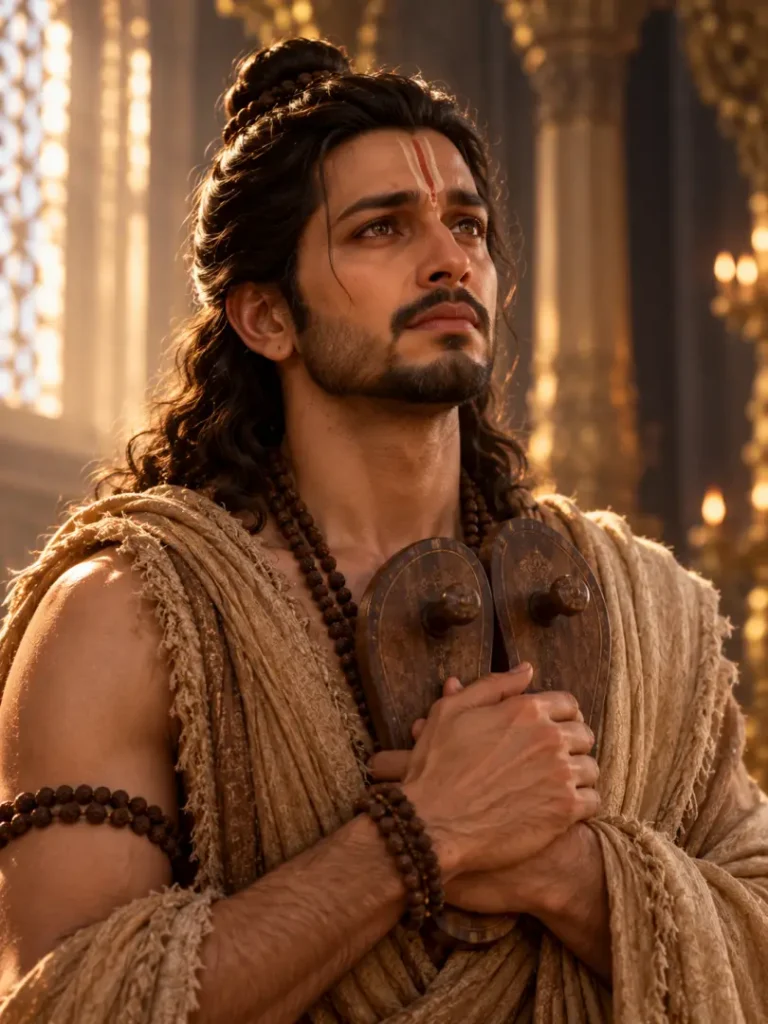
एतत्तु वचनं श्रुत्वा सुमन्त्राद्भरत श्शुभम् ।
उवाच वचनं शीघ्रं गुहः पश्यतु मामिति ॥
etattu vacanaṃ śrutvā sumantrādbharata śśubham |
uvāca vacanaṃ śīghraṃ guhaḥ paśyatu māmiti ||
हिंदी अर्थसुमंत्र से ये शुभ वचन सुनकर भरत ने तुरंत कहा: गुह मुझसे मिलें।
English meaningHearing these good words from Sumantra, Bharata said at once: Let Guha see me.
लब्ध्वाऽभ्यनुज्ञां संहृष्टो ज्ञातिभिः परिवारितः ।
आगम्य भरतं प्रह्वो गुहो वचनमब्रवीत् ॥
labdhvā'bhyanujñāṃ saṃhṛṣṭo jñātibhiḥ parivāritaḥ |
āgamya bharataṃ prahvo guho vacanamabravīt ||
हिंदी अर्थआज्ञा पाकर प्रसन्न गुह अपने बंधुओं से घिरे भरत के पास आए, झुके और बोले:
English meaningGiven leave, Guha, delighted and surrounded by his kin, came to Bharata, bowed and said:
निष्कुटश्चैव देशोऽयं वञ्चिताश्चापि ते वयम् ।
निवेदयामस्ते सर्वे स्वके दासकुले वस ॥
niṣkuṭaścaiva deśo'yaṃ vañcitāścāpi te vayam |
nivedayāmaste sarve svake dāsakule vasa ||
हिंदी अर्थयह देश आपका उद्यान है, और आपने हमें अचानक आकर चकित कर दिया। हम सब स्वयं को अर्पित करते हैं; अपने दासों के घर में रहिए।
English meaningThis land is your pleasure garden, and you have taken us by surprise. We all offer ourselves; stay in your own servants' home.
अस्ति मूलं फलञ्चैव निषादैस्समुपाहृतम् ।
आर्द्रं च मांसं शुष्कं च वन्यं चोच्चावचं महत् ॥
asti mūlaṃ phalañcaiva niṣādaissamupāhṛtam |
ārdraṃ ca māṃsaṃ śuṣkaṃ ca vanyaṃ coccāvacaṃ mahat ||
हिंदी अर्थयहाँ निषादों द्वारा लाए कंद और फल हैं, और हर प्रकार का बहुत सा ताजा और सूखा वन्य मांस।
English meaningHere are roots and fruits brought by the Nishadas, and a great deal of fresh and dried forest meat of every kind.
आशंसे स्वाशिता सेना वत्स्यतीमां विभावरीम् ।
अर्चितो विविधैः कामै श्श्व स्ससैन्यो गमिष्यसि ॥
āśaṃse svāśitā senā vatsyatīmāṃ vibhāvarīm |
arcito vividhaiḥ kāmai śśva ssasainyo gamiṣyasi ||
हिंदी अर्थमैं आशा करता हूँ कि सेना यह रात अच्छी तरह खा पीकर बिताएगी। सब इच्छित वस्तुओं से सम्मानित होकर आप कल सेना सहित आगे जाएँगे।
English meaningI hope the army will spend this night well fed. Honoured with all you wish, you will go on tomorrow with your army.