Makar Sankranti 2027
मकर संक्रांतिMakar Sankranti marks the Sun's entry into Capricorn and the start of Uttarayan. Families take holy baths, share til-gud and khichdi, fly kites and give charity.
Next: Friday, 15 January 2027
Quick answer
Makar Sankranti 2027 falls on Friday, 15 January 2027 (Sun's entry into Makara (Capricorn)). In 2026 it fell on Wednesday, 14 January 2026.
Dates follow the Delhi panchang and can shift by a day in your region, so confirm the muhurat with a local panchang.
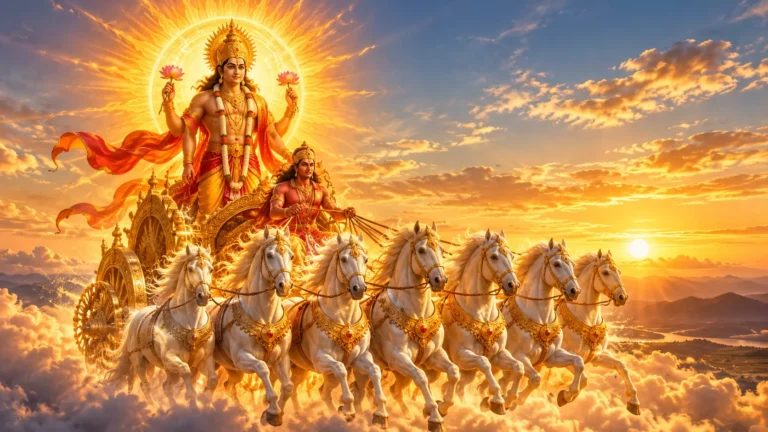
Makar Sankranti 2027 falls on Friday, 15 January. It marks the Sun’s entry into Makara (Capricorn) and the start of Uttarayan, the Sun’s six-month northward journey, which tradition counts as the most auspicious half of the year. Unlike most Hindu festivals, it follows the solar calendar, which is why its date barely moves from year to year. It is honoured across India under many names, from Pongal in Tamil Nadu to Uttarayan in Gujarat and Magh Bihu in Assam, and is dedicated to Surya, the Sun god.
Makar Sankranti 2027 date
In 2027 the Sun enters Makara on the night of 14 January, after sunset. Because the sacred bathing and charity time (punya kaal) is reckoned from sunrise, the festival is observed on Friday, 15 January 2027. In 2026 it fell on Wednesday, 14 January. Check a local panchang for the punya kaal in your city.
Why Makar Sankranti is celebrated
The festival honours the Sun as the visible giver of life and harvest. Its spiritual weight comes from Uttarayan: in the Mahabharata, Bhishma, lying on his bed of arrows after the Kurukshetra war, waits for the Sun to turn north before leaving his body, because death in Uttarayan was held to lead to liberation. A popular tradition also says that on this day Surya visits his son Shani, the lord of Makara, setting aside their differences, which is why the day is linked to reconciliation and sweetness. In Bengal, the Gangasagar Mela at the meeting of the Ganga and the sea recalls the river’s descent to free the ancestors of King Bhagiratha.
How Makar Sankranti is celebrated
- Holy bath: a dip at sunrise in the Ganga, Yamuna, Godavari or the sea at Gangasagar, followed by arghya to the Sun.
- Til and jaggery: sesame and jaggery sweets (til-gud, tilkut, chikki) are shared; in Maharashtra people say “til-gul ghya, god god bola”, “take sweets and speak sweetly”.
- Khichdi and charity: in Uttar Pradesh and Bihar the day is called Khichdi; rice, lentils, blankets and sesame are given to the needy.
- Kites: Gujarat and Rajasthan fill the sky with kites for Uttarayan.
- Harvest: Pongal in Tamil Nadu, Lohri in Punjab the night before, and Magh Bihu in Assam all celebrate the new crop.
The meaning of Makar Sankranti
Makar Sankranti is a festival of turning towards the light. As the days grow longer, families give thanks for the harvest, share what they have, and resolve to speak and act with sweetness. See every festival of the year on the Hindu festival calendar.
Frequently asked questions
When is Makar Sankranti in 2027?
Makar Sankranti 2027 is on Friday, 15 January. The Sun enters Makara on the night of 14 January, so the festival is observed the next day.
Why is Makar Sankranti always in January?
Makar Sankranti follows the solar calendar, the Sun’s entry into Capricorn, so it stays on 14 or 15 January, unlike lunar festivals.
What are the other names of Makar Sankranti?
Pongal in Tamil Nadu, Uttarayan in Gujarat, Khichdi in Uttar Pradesh and Bihar, Magh Bihu in Assam and Maghi in Punjab.
Sources and further reading
- Mahabharata, Anushasana Parva (Bhishma and Uttarayana), Sacred Texts
- Hindu festival dates 2026 (Samvat panchang calendar)
- Hindu festival dates 2027 (Samvat panchang calendar)
Read our editorial policy on how scripture, Purana and folk tradition are labelled.