Skip to content
Bala Kanda Sarga 27 of 77 26 shlokas Journey stop 2
Valmiki Ramayana · Bala Kanda · Sarga 27

The Gift of Divine Weapons

बालकांड, सर्ग 27: दिव्य अस्त्रों का दान

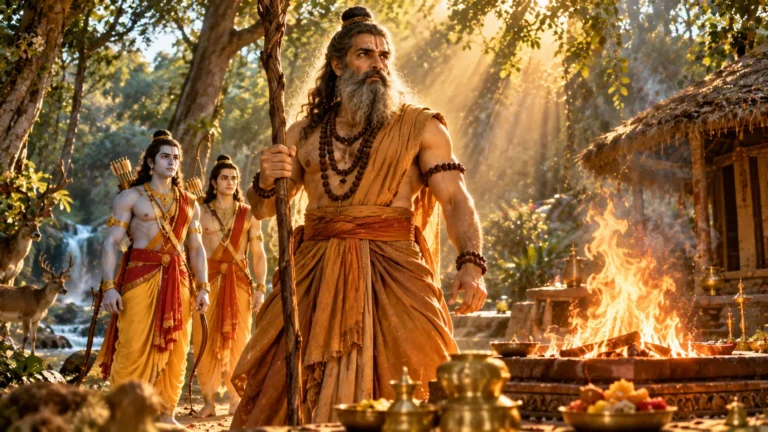
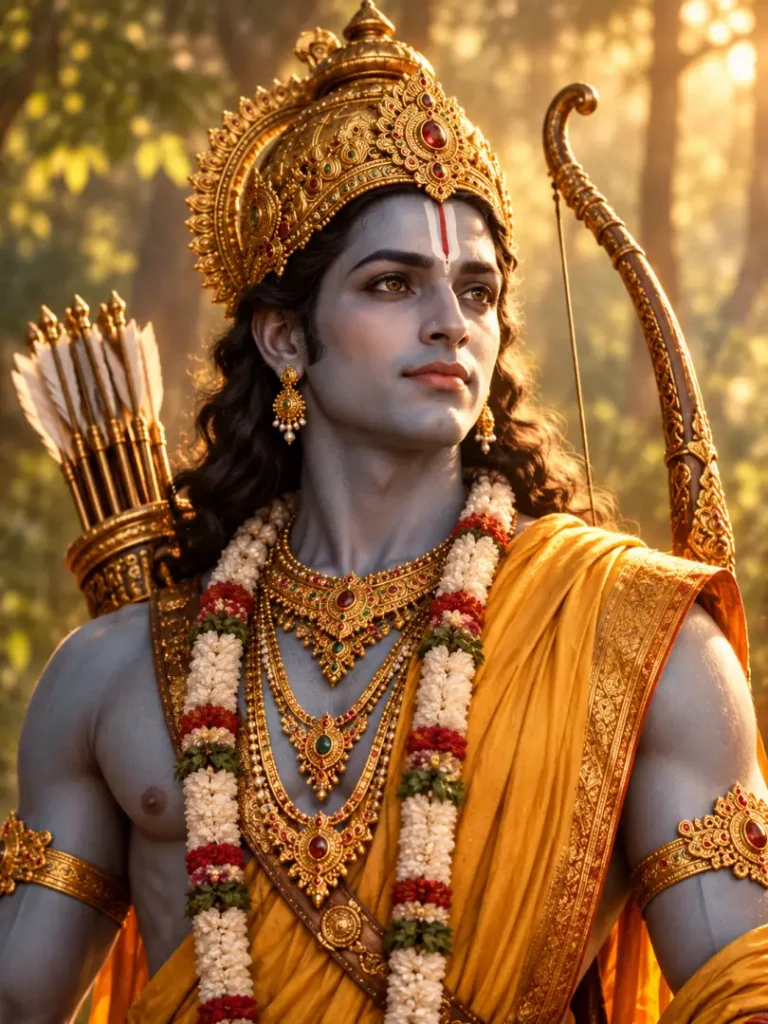
Pleased with Rama, Vishwamitra grants him the celestial weapons, among them the discus of dharma, the noose of Varuna and the Brahmastra. Each weapon appears in shining form and offers itself to Rama.

राम से प्रसन्न होकर विश्वामित्र उन्हें दिव्य अस्त्र देते हैं, जिनमें धर्मचक्र, वरुण पाश और ब्रह्मास्त्र भी हैं। प्रत्येक अस्त्र तेजस्वी रूप में प्रकट होकर स्वयं को राम को अर्पित करता है।

1 1.27.1

अथ तां रजनीमुष्य विश्वामित्रो महायशाः ।
प्रहस्य राघवं वाक्यमुवाच मधुराक्षरम् ॥

atha tāṃ rajanīmuṣya viśvāmitro mahāyaśāḥ |
prahasya rāghavaṃ vākyamuvāca madhurākṣaram ||

हिंदी अर्थ

वह रात बिताकर महायशस्वी विश्वामित्र ने मुस्कुराकर राघव से मधुर वचन कहे:

English meaning

Having spent that night, the renowned Vishvamitra smiled and spoke to Raghava in sweet words:

2 1.27.2

परितुष्टोऽस्मि भद्रं ते राजपुत्र महायशः ।
प्रीत्या परमया युक्तो ददाम्यस्त्राणि सर्वशः ॥

parituṣṭo'smi bhadraṃ te rājaputra mahāyaśaḥ |
prītyā paramayā yukto dadāmyastrāṇi sarvaśaḥ ||

हिंदी अर्थ

हे महायशस्वी राजकुमार, मैं बहुत संतुष्ट हूँ, तुम्हारा कल्याण हो। परम प्रेम से मैं तुम्हें सब अस्त्र देता हूँ।

English meaning

I am well pleased, glorious prince, blessings on you. With the greatest affection I give you all the weapons.

3 1.27.3

देवासुरगणान्वापि सगन्धर्वोरगानपि ।
यैरमित्रान् प्रसह्याजौ वशीकृत्य जयिष्यसि ।
तानि दिव्यानि भद्रं ते ददाम्यस्त्राणि सर्वशः ॥

devāsuragaṇānvāpi sagandharvoragānapi |
yairamitrān prasahyājau vaśīkṛtya jayiṣyasi |
tāni divyāni bhadraṃ te dadāmyastrāṇi sarvaśaḥ ||

हिंदी अर्थ

इनसे तुम युद्ध में शत्रुओं को, चाहे वे देवताओं और असुरों के समूह हों या गंधर्व और नाग, बलपूर्वक वश में करके जीत लोगे। तुम्हारा कल्याण हो; मैं तुम्हें ये सब दिव्य अस्त्र देता हूँ।

English meaning

With them you will subdue and defeat your enemies in battle, whether hosts of gods and asuras or gandharvas and serpents. Blessings on you; I give you all these divine weapons.

4-6 1.27.4-6

दण्डचक्रं महद्दिव्यं तव दास्यामि राघव ।
धर्मचक्रं ततो वीर कालचक्रं तथैव च ।
विष्णुचक्रं तथात्युग्रमैन्द्रमस्त्रं तथैव च ।
वज्रमस्त्रं नरश्रेष्ठ शैवं शूलवरं तथा ।
अस्त्रं ब्रह्मशिरश्चैव ऐषीकमपि राघव ।
ददामि ते महाबाहो ब्राह्ममस्त्रमनुत्तमम् ॥

daṇḍacakraṃ mahaddivyaṃ tava dāsyāmi rāghava |
dharmacakraṃ tato vīra kālacakraṃ tathaiva ca |
viṣṇucakraṃ tathātyugramaindramastraṃ tathaiva ca |
vajramastraṃ naraśreṣṭha śaivaṃ śūlavaraṃ tathā |
astraṃ brahmaśiraścaiva aiṣīkamapi rāghava |
dadāmi te mahābāho brāhmamastramanuttamam ||

हिंदी अर्थ

हे राघव, मैं तुम्हें महान दिव्य दंडचक्र दूँगा, फिर धर्मचक्र और कालचक्र, अत्यंत उग्र विष्णुचक्र और ऐंद्र अस्त्र, हे नरश्रेष्ठ, वज्र अस्त्र, शिव का श्रेष्ठ शूल, ब्रह्मशिर और ऐषीक अस्त्र, और हे महाबाहु, सर्वोत्तम ब्रह्मास्त्र।

English meaning

Raghava, I shall give you the great divine Danda discus, then the Dharma discus and the Kala discus, hero, the very fierce Vishnu discus and Indra's weapon, the Vajra weapon, best of men, Shiva's excellent trident, the Brahmashiras and the Aishika, and, mighty armed one, the supreme Brahma weapon.

7 1.27.7

गदे द्वे चैव काकुत्स्थ मोदकी शिखरी उभे ।
प्रदीप्ते नरशार्दूल प्रयच्छामि नृपात्मज ॥

gade dve caiva kākutstha modakī śikharī ubhe |
pradīpte naraśārdūla prayacchāmi nṛpātmaja ||

हिंदी अर्थ

हे काकुत्स्थ, नरशार्दूल, राजकुमार, मैं तुम्हें मोदकी और शिखरी नाम की दो प्रज्वलित गदाएँ भी देता हूँ।

English meaning

Kakutstha, tiger among men, prince, I give you also the two blazing maces, Modaki and Shikhari.

8 1.27.8

धर्मपाशमहं राम कालपाशं तथैव च ।
पाशं वारुणमस्त्रं च ददाम्यहमनुत्तमम् ॥

dharmapāśamahaṃ rāma kālapāśaṃ tathaiva ca |
pāśaṃ vāruṇamastraṃ ca dadāmyahamanuttamam ||

हिंदी अर्थ

हे राम, मैं तुम्हें धर्मपाश, कालपाश और अनुपम वारुणपाश देता हूँ।

English meaning

Rama, I give you the noose of Dharma, the noose of Kala, and the matchless noose of Varuna.

9 1.27.9

अशनी द्वे प्रयच्छामि शुष्कार्द्रे रघुनन्दन ।
ददामि चास्त्रं पैनाकमस्त्रं नारायणं तथा ॥

aśanī dve prayacchāmi śuṣkārdre raghunandana |
dadāmi cāstraṃ painākamastraṃ nārāyaṇaṃ tathā ||

हिंदी अर्थ

हे रघुनंदन, मैं तुम्हें शुष्क और आर्द्र नाम के दो अशनि, तथा पिनाक अस्त्र और नारायण अस्त्र देता हूँ।

English meaning

Joy of the Raghus, I give you the two thunderbolts, the Dry and the Wet, and the Pinaka weapon and the Narayana weapon.

10 1.27.10

आग्नेयमस्त्रं दयितं शिखरं नाम नामतः ।
वायव्यं प्रथनं नाम ददामि च तवानघ ॥

āgneyamastraṃ dayitaṃ śikharaṃ nāma nāmataḥ |
vāyavyaṃ prathanaṃ nāma dadāmi ca tavānagha ||

हिंदी अर्थ

हे निष्पाप, मैं तुम्हें अग्नि का प्रिय शिखर नाम का अस्त्र और वायु का प्रथन नाम का अस्त्र देता हूँ।

English meaning

Sinless one, I give you Agni's beloved weapon called Shikhara, and Vayu's weapon called Prathana.

11 1.27.11

अस्त्रं हयशिरो नाम क्रौञ्चमस्त्रं तथैव च ।
शक्तिद्वयं च काकुत्स्थ ददामि तव राघव ॥

astraṃ hayaśiro nāma krauñcamastraṃ tathaiva ca |
śaktidvayaṃ ca kākutstha dadāmi tava rāghava ||

हिंदी अर्थ

हे काकुत्स्थ राघव, मैं तुम्हें हयशिर नाम का अस्त्र, क्रौंच अस्त्र और दो शक्तियाँ देता हूँ।

English meaning

Kakutstha, Raghava, I give you the weapon called Hayashiras, the Krauncha weapon and two spears.

12 1.27.12

कङ्कालं मुसलं घोरं कापालमथ कङ्कणम् ।
धारयन्त्यसुरा यानि ददाम्येतानि सर्वशः ॥

kaṅkālaṃ musalaṃ ghoraṃ kāpālamatha kaṅkaṇam |
dhārayantyasurā yāni dadāmyetāni sarvaśaḥ ||

हिंदी अर्थ

असुर जिन्हें धारण करते हैं वे सब मैं तुम्हें देता हूँ: भयानक कंकाल, मुसल, कपाल और कंकण।

English meaning

I give you all of these that the asuras bear: the terrible Kankala, the Musala, the Kapala and the Kankana.

13 1.27.13

वैद्याधरं महास्त्रं च नन्दनं नाम नामतः ।
असिरत्नं महाबाहो ददामि च नृपात्मज ॥

vaidyādharaṃ mahāstraṃ ca nandanaṃ nāma nāmataḥ |
asiratnaṃ mahābāho dadāmi ca nṛpātmaja ||

हिंदी अर्थ

हे महाबाहु राजकुमार, मैं तुम्हें विद्याधरों का नंदन नाम का महास्त्र और श्रेष्ठ खड्ग देता हूँ।

English meaning

Mighty armed prince, I give you the great weapon of the vidyadharas called Nandana, and the jewel of swords.

14 1.27.14

गान्धर्वमस्त्रं दयितं मानवं नाम नामतः ।
प्रस्वापनप्रशमने दद्मि सौरं च राघव ॥

gāndharvamastraṃ dayitaṃ mānavaṃ nāma nāmataḥ |
prasvāpanapraśamane dadmi sauraṃ ca rāghava ||

हिंदी अर्थ

हे राघव, मैं तुम्हें गंधर्वों का प्रिय मानव नाम का अस्त्र, प्रस्वापन और प्रशमन, तथा सौर अस्त्र देता हूँ।

English meaning

Raghava, I give you the gandharvas' beloved weapon called Manava, Prasvapana and Prashamana, and Saura.

15-16 1.27.15-16

दर्पणं शोषणं चैव सन्तापनविलापने ।
मदनं चैव दुर्धर्षं कन्दर्पदयितं तथा ।
पैशाचमस्त्रं दयितं मोहनं नाम नामतः ।
प्रतीच्छ नरशार्दूल राजपुत्र महायशः ॥

darpaṇaṃ śoṣaṇaṃ caiva santāpanavilāpane |
madanaṃ caiva durdharṣaṃ kandarpadayitaṃ tathā |
paiśācamastraṃ dayitaṃ mohanaṃ nāma nāmataḥ |
pratīccha naraśārdūla rājaputra mahāyaśaḥ ||

हिंदी अर्थ

दर्पण, शोषण, संतापन और विलापन, कंदर्प का प्रिय दुर्धर्ष मदन, और पैशाच अस्त्र जिसका नाम मोहन है: हे नरशार्दूल, महायशस्वी राजकुमार, इन्हें ग्रहण करो।

English meaning

Darpana, Shoshana, Santapana and Vilapana, the invincible Madana dear to Kandarpa, and the Paishacha weapon called Mohana: receive them, tiger among men, glorious prince.

17-19 1.27.17-19

तामसं नरशार्दूल सौमनं च महाबल ।
संवर्धं चैव दुर्धर्षं मौसलं च नृपात्मज ।
सत्यमस्त्रं महाबाहो तथा मायाधरं परम् ।
घोरं तेजः प्रभं नाम परतेजोऽपकर्षणम् ।
सौम्यास्त्रं शिशिरं नाम त्वष्टुरस्त्रं सुदामनम् ।
दारुणं च भगस्यापि शितेषु मथ मानवम् ॥

tāmasaṃ naraśārdūla saumanaṃ ca mahābala |
saṃvardhaṃ caiva durdharṣaṃ mausalaṃ ca nṛpātmaja |
satyamastraṃ mahābāho tathā māyādharaṃ param |
ghoraṃ tejaḥ prabhaṃ nāma paratejo'pakarṣaṇam |
saumyāstraṃ śiśiraṃ nāma tvaṣṭurastraṃ sudāmanam |
dāruṇaṃ ca bhagasyāpi śiteṣu matha mānavam ||

हिंदी अर्थ

हे महाबली राजकुमार, नरशार्दूल, तामस और सौमन, दुर्धर्ष संवर्त और मौसल, सत्य अस्त्र और श्रेष्ठ मायाधर, दूसरों का तेज हरने वाला उग्र तेजप्रभ, शिशिर नाम का सौम्य अस्त्र, त्वष्टा का सुदामन, भग का दारुण अस्त्र, और शीतेषु तथा मानव भी लो।

English meaning

Mighty prince, tiger among men, take also Tamasa and Saumana, the invincible Samvarta and Mausala, the Satya weapon and the supreme Mayadhara, the fierce Tejaprabha that draws away another's splendour, the Saumya weapon called Shishira, Tvashtri's weapon Sudamana, Bhaga's dreadful weapon, and Shiteshu and Manava.
20 1.27.20

एतान् राम महाबाहो कामरूपान् महाबलान् ।
गृहाण परमोदारान् क्षिप्रमेव नृपात्मज ॥

etān rāma mahābāho kāmarūpān mahābalān |
gṛhāṇa paramodārān kṣiprameva nṛpātmaja ||

हिंदी अर्थ

हे महाबाहु राम, राजकुमार, इच्छानुसार रूप धरने वाले, महाबली और परम उदार इन अस्त्रों को शीघ्र ग्रहण करो।

English meaning

Mighty armed Rama, prince, take quickly these most noble weapons, very powerful and able to take any form.

21 1.27.21

स्थितस्तु प्राङ्मुखो भूत्वा शुचिर्मुनिवरस्तदा ।
ददौ रामाय सुप्रीतो मन्त्रग्राममनुत्तमम् ॥

sthitastu prāṅmukho bhūtvā śucirmunivarastadā |
dadau rāmāya suprīto mantragrāmamanuttamam ||

हिंदी अर्थ

तब पवित्र मुनिश्रेष्ठ ने पूर्व की ओर मुख करके प्रसन्नता से राम को सर्वोत्तम मंत्रसमूह दिया।

English meaning

Then the best of sages, pure and facing east, gladly gave Rama the supreme set of mantras.

22 1.27.22

सर्वसङ्ग्रहणं येषां दैवतैरपि दुर्लभम् ।
तान्यस्त्राणि तदा विप्रो राघवाय न्यवेदयत् ॥

sarvasaṅgrahaṇaṃ yeṣāṃ daivatairapi durlabham |
tānyastrāṇi tadā vipro rāghavāya nyavedayat ||

हिंदी अर्थ

तब ब्राह्मण ने राघव को वे अस्त्र सौंपे, जिनका पूरा संग्रह देवताओं के लिए भी दुर्लभ है।

English meaning

The brahmin then handed over to Raghava those weapons, the full command of which is hard to gain even for the gods.

23 1.27.23

जपतस्तु मुनेस्तस्य विश्वामित्रस्य धीमतः ।
उपतस्थुर्महार्हाणि सर्वाण्यस्त्राणि राघवम् ॥

japatastu munestasya viśvāmitrasya dhīmataḥ |
upatasthurmahārhāṇi sarvāṇyastrāṇi rāghavam ||

हिंदी अर्थ

बुद्धिमान मुनि विश्वामित्र के जप करते ही वे सब बहुमूल्य अस्त्र राघव के सामने आ उपस्थित हुए।

English meaning

As the wise sage Vishvamitra recited, all the precious weapons came and stood before Raghava.

24 1.27.24

ऊचुश्च मुदितास्सर्वे रामं प्राञ्जलयस्तदा ।
इमे स्म परमोदाराः किङ्करास्तव राघव ॥

ūcuśca muditāssarve rāmaṃ prāñjalayastadā |
ime sma paramodārāḥ kiṅkarāstava rāghava ||

हिंदी अर्थ

उन सबने प्रसन्न होकर, हाथ जोड़कर राम से कहा: हे राघव, हम परम उदार अस्त्र आपके सेवक हैं।

English meaning

All of them, joyful and with folded hands, said to Rama: Raghava, we most noble ones are your servants.

25 1.27.25

प्रतिगृह्य च काकुत्स्थः समालभ्य च पाणिना ।
मानसा मे भविष्यध्वमिति तानभ्यचोदयत् ॥

pratigṛhya ca kākutsthaḥ samālabhya ca pāṇinā |
mānasā me bhaviṣyadhvamiti tānabhyacodayat ||

हिंदी अर्थ

काकुत्स्थ ने उन्हें स्वीकार किया, हाथ से उनका स्पर्श किया और उनसे कहा: जब मैं तुम्हें मन में स्मरण करूँ, तब तुम आ जाना।

English meaning

Kakutstha accepted them, touched them with his hand and told them: Come to me whenever I think of you.

26 1.27.26

ततः प्रीतमना रामो विश्वामित्रं महामुनिम् ।
अभिवाद्य महातेजा गमनायोपचक्रमे ॥

tataḥ prītamanā rāmo viśvāmitraṃ mahāmunim |
abhivādya mahātejā gamanāyopacakrame ||

हिंदी अर्थ

फिर प्रसन्न मन वाले महातेजस्वी राम ने महामुनि विश्वामित्र को प्रणाम किया और आगे चलने को तैयार हुए।

English meaning

Then the radiant Rama, glad at heart, saluted the great sage Vishvamitra and made ready to go on.

Next sarga · Bala Kanda 28Recall of the WeaponsRama asks how to withdraw the weapons once released. Vishwamitra teaches him the counter mantras, and as they approach the sage's hermitage Rama asks what place…

Characters in this sarga

All characters