श्रुत्वा वस्तु समग्रं तद्धर्मात्मा धर्मसंहितम् ।
व्यक्तमन्वेषते भूयो यद्वृत्तं तस्य धीमतः ॥
śrutvā vastu samagraṃ taddharmātmā dharmasaṃhitam |
vyaktamanveṣate bhūyo yadvṛttaṃ tasya dhīmataḥ ||
हिंदी अर्थधर्म से युक्त उस पूरी कथा को सुनकर धर्मात्मा मुनि ने बुद्धिमान राम के साथ जो कुछ हुआ उसे और स्पष्ट रूप से जानना चाहा।
English meaningHaving heard the whole of that story, rooted in dharma, the righteous sage sought to see more clearly everything that had happened to the wise Rama.
उपस्पृश्योदकं सम्यग्मुनिस्स्थित्वा कृताञ्जलिः ।
प्राचीनाग्रेषु दर्भेषु धर्मेणान्वेषते गतिम् ॥
upaspṛśyodakaṃ samyagmunissthitvā kṛtāñjaliḥ |
prācīnāgreṣu darbheṣu dharmeṇānveṣate gatim ||
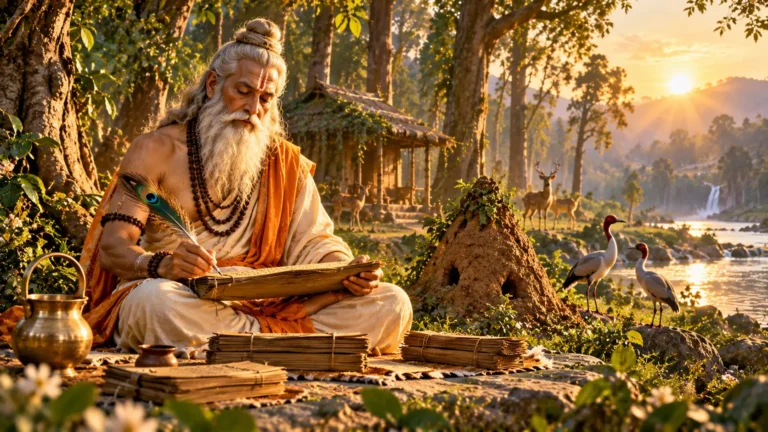
हिंदी अर्थविधिपूर्वक आचमन कर मुनि पूर्व की ओर नोक वाले कुशों पर हाथ जोड़कर बैठे और धर्म के बल से कथा की गति खोजने लगे।
English meaningSipping water in the proper way, the sage sat with folded hands on darbha grass with its tips pointing east and, through the power of dharma, sought the path of the story.
रामलक्ष्मणसीताभी राज्ञा दशरथेन च ।
सभार्येण सराष्ट्रेण यत्प्राप्तं तत्र तत्त्वतः ।
हसितं भाषितं चैव गतिर्या यच्च चेष्टितम् ।
तत्सर्वं धर्मवीर्येण यथावत्सम्प्रपश्यति ॥
rāmalakṣmaṇasītābhī rājñā daśarathena ca |
sabhāryeṇa sarāṣṭreṇa yatprāptaṃ tatra tattvataḥ |
hasitaṃ bhāṣitaṃ caiva gatiryā yacca ceṣṭitam |
tatsarvaṃ dharmavīryeṇa yathāvatsamprapaśyati ||
हिंदी अर्थअपने धर्म के बल से उन्होंने राम, लक्ष्मण और सीता के, तथा रानियों और राज्य सहित राजा दशरथ के सभी अनुभव सच्चाई से देखे: उनका हँसना, बोलना, चलना और उनके कर्म, ठीक वैसे ही जैसे वे थे।
English meaningBy the power of his dharma he saw truly all that Rama, Lakshmana and Sita had experienced, and King Dasharatha with his queens and kingdom: their laughter, their words, their movements and their actions, exactly as they were.
स्त्रीतृतीयेन च तदा यत्प्राप्तं चरता वने ।
सत्यसन्धेन रामेण तत्सर्वं चान्ववेक्षितम् ॥
strītṛtīyena ca tadā yatprāptaṃ caratā vane |
satyasandhena rāmeṇa tatsarvaṃ cānvavekṣitam ||
हिंदी अर्थउन्होंने यह भी देखा कि सत्यप्रतिज्ञ राम को लक्ष्मण और सीता के साथ वन में विचरते हुए क्या क्या मिला।
English meaningHe also saw everything that Rama, true to his word, met with while wandering in the forest with Lakshmana and Sita as his companions.
ततः पश्यति धर्मात्मा तत्सर्वं योगमास्थितः ।
पुरा यत्तत्र निर्वृत्तं पाणावामलकं यथा ॥
tataḥ paśyati dharmātmā tatsarvaṃ yogamāsthitaḥ |
purā yattatra nirvṛttaṃ pāṇāvāmalakaṃ yathā ||
हिंदी अर्थतब योग में स्थित धर्मात्मा मुनि ने बहुत पहले घटी सब बातें हथेली पर रखे आँवले की तरह स्पष्ट देख लीं।
English meaningThen the righteous sage, established in yoga, saw all that had happened long ago as clearly as an amalaka fruit in the palm of his hand.
तत्सर्वं तत्त्वतो दृष्ट्वा धर्मेण स महाद्युतिः ।
अभिरामस्य रामस्य चरितं कर्तुमुद्यतः ।
कामार्थगुणसंयुक्तं धर्मार्थगुणविस्तरम् ।
समुद्रमिव रत्नाढ्यं सर्वश्रुतिमनोहरम् ॥
tatsarvaṃ tattvato dṛṣṭvā dharmeṇa sa mahādyutiḥ |
abhirāmasya rāmasya caritaṃ kartumudyataḥ |
kāmārthaguṇasaṃyuktaṃ dharmārthaguṇavistaram |
samudramiva ratnāḍhyaṃ sarvaśrutimanoharam ||
हिंदी अर्थधर्म के द्वारा यह सब सच्चाई से देखकर तेजस्वी मुनि ने मनोहर राम का चरित्र रचना आरंभ किया, जो काम और अर्थ से युक्त, धर्म और प्रयोजन में विस्तृत, समुद्र के समान रत्नों से भरा, और हर कान को प्रिय है।
English meaningHaving truly seen all of it through dharma, the radiant sage set out to compose the life of the delightful Rama, rich in love and wealth, broad in dharma and purpose, full of gems like the ocean, and pleasing to every ear.
स यथा कथितं पूर्वं नारदेन महर्षिणा ।
रघुवंशस्य चरितं चकार भगवानृषिः ॥
sa yathā kathitaṃ pūrvaṃ nāradena maharṣiṇā |
raghuvaṃśasya caritaṃ cakāra bhagavānṛṣiḥ ||
हिंदी अर्थजैसा महर्षि नारद ने पहले कहा था, वैसे ही भगवान ऋषि ने रघुवंश का चरित्र रचा।
English meaningJust as the great sage Narada had told it before, the holy seer composed the story of the line of Raghu.
जन्म रामस्य सुमहद्वीर्यं सर्वानुकूलताम् ।
लोकस्य प्रियतां क्षान्तिं सौम्यतां सत्यशीलताम् ॥
janma rāmasya sumahadvīryaṃ sarvānukūlatām |
lokasya priyatāṃ kṣāntiṃ saumyatāṃ satyaśīlatām ||
हिंदी अर्थउन्होंने राम के जन्म, उनके महान पराक्रम, सबके प्रति अनुकूलता, लोकप्रियता, क्षमा, सौम्यता और सत्यशीलता का वर्णन किया।
English meaningHe told of Rama's birth, his great valour, his kindness to all, his being loved by the world, his patience, gentleness and truthfulness.
नानाचित्रकथाश्चान्या विश्वामित्रसमागमे ।
जानक्याश्च विवाहं च धनुषश्च विभेदनम् ॥
nānācitrakathāścānyā viśvāmitrasamāgame |
jānakyāśca vivāhaṃ ca dhanuṣaśca vibhedanam ||
हिंदी अर्थउन्होंने विश्वामित्र के साथ रहते हुए सुनी गई अनेक अद्भुत कथाएँ, जानकी का विवाह और धनुष का टूटना बताया।
English meaningHe told the many wonderful stories heard while Rama was with Vishwamitra, and the marriage of Janaki and the breaking of the bow.
रामरामविवादं च गुणान्दाशरथेस्तथा ।
तथाऽभिषेकं रामस्य कैकेय्या दुष्टभावताम् ॥
rāmarāmavivādaṃ ca guṇāndāśarathestathā |
tathā'bhiṣekaṃ rāmasya kaikeyyā duṣṭabhāvatām ||
हिंदी अर्थदोनों रामों का विवाद, दशरथ पुत्र के गुण, राम का प्रस्तावित राज्याभिषेक और कैकेयी का दुर्भाव,
English meaningThe dispute between the two Ramas, the virtues of Dasharatha's son, the planned coronation of Rama and the ill will of Kaikeyi,
विघातं चाभिषेकस्य राघवस्य विवासनम् ।
राज्ञश्शोकविलापं च परलोकस्य चाश्रयम् ॥
vighātaṃ cābhiṣekasya rāghavasya vivāsanam |
rājñaśśokavilāpaṃ ca paralokasya cāśrayam ||
हिंदी अर्थराज्याभिषेक में बाधा, राघव का वनवास, राजा का शोक और विलाप, और उनका परलोक गमन,
English meaningthe obstruction of the coronation, Raghava's exile, the king's grief and lament, and his passing to the other world,
प्रकृतीनां विषादं च प्रकृतीनां विसर्जनम् ।
निषादाधिपसंवादं सूतोपावर्तनं तथा ॥
prakṛtīnāṃ viṣādaṃ ca prakṛtīnāṃ visarjanam |
niṣādādhipasaṃvādaṃ sūtopāvartanaṃ tathā ||
हिंदी अर्थप्रजा का विषाद और उन्हें लौटाना, निषादराज से संवाद और सारथि का लौटना,
English meaningthe despair of the people and their being sent back, the talk with the chief of the Nishadas and the return of the charioteer,
गङ्गायाश्चापि सन्तारं भरद्वाजस्य दर्शनम् ।
भरद्वाजाभ्यनुज्ञानाच्चित्रकूटस्य दर्शनम् ॥
gaṅgāyāścāpi santāraṃ bharadvājasya darśanam |
bharadvājābhyanujñānāccitrakūṭasya darśanam ||
हिंदी अर्थगंगा पार करना, भरद्वाज से भेंट और उनकी अनुमति से चित्रकूट का दर्शन,
English meaningthe crossing of the Ganga, the meeting with Bharadwaja and, with his leave, the first sight of Chitrakoot,
वास्तुकर्म निवेशं च भरतागमनं तथा ।
प्रसादनं च रामस्य पितुश्च सलिलक्रियाम् ॥
vāstukarma niveśaṃ ca bharatāgamanaṃ tathā |
prasādanaṃ ca rāmasya pituśca salilakriyām ||
हिंदी अर्थआवास बनाना और बसना, भरत का आना, राम को मनाना और पिता के लिए जलांजलि,
English meaningthe building and settling of the dwelling, the coming of Bharata, his pleading with Rama and the water offering for their father,
पादुकाग्र्याभिषेकं च नन्दिग्रामनिवासनम् ।
दण्डकारण्यगमनं विराधस्य वधं तथा ॥
pādukāgryābhiṣekaṃ ca nandigrāmanivāsanam |
daṇḍakāraṇyagamanaṃ virādhasya vadhaṃ tathā ||
हिंदी अर्थश्रेष्ठ पादुकाओं का अभिषेक, नंदीग्राम में निवास, दंडकारण्य में जाना और विराध का वध,
English meaningthe crowning of the noble sandals, the stay at Nandigram, the journey into the Dandaka forest and the killing of Viradha,
दर्शनं शरभङ्गस्य सुतीक्ष्णेन समागमम् ।
अनसूयासहास्यामप्यङ्गरागस्य चार्पणम् ॥
darśanaṃ śarabhaṅgasya sutīkṣṇena samāgamam |
anasūyāsahāsyāmapyaṅgarāgasya cārpaṇam ||
हिंदी अर्थशरभंग से भेंट, सुतीक्ष्ण से मिलना, और सीता के साथ रहते हुए अनसूया का अंगराग देना,
English meaningthe meeting with Sharabhanga, the visit to Sutikshna, and Anasuya's gift of fragrant ointment while she was with Sita,
अगस्त्यदर्शनं चैव जटायोरभिसङ्गमम् ।
पञ्चवट्याश्च गमनं शूर्पणख्याश्च दर्शनम् ॥
agastyadarśanaṃ caiva jaṭāyorabhisaṅgamam |
pañcavaṭyāśca gamanaṃ śūrpaṇakhyāśca darśanam ||
हिंदी अर्थअगस्त्य का दर्शन, जटायु से मिलना, पंचवटी जाना और शूर्पणखा का आना,
English meaningthe meeting with Agastya, the encounter with Jatayu, the journey to Panchavati and the coming of Shurpanakha,
शूर्पणख्याश्च संवादं विरूपकरणं तथा ।
वधं खरत्रिशिरसोरुत्थानं रावणस्य च ॥
śūrpaṇakhyāśca saṃvādaṃ virūpakaraṇaṃ tathā |
vadhaṃ kharatriśirasorutthānaṃ rāvaṇasya ca ||
हिंदी अर्थशूर्पणखा से संवाद और उसका विरूपीकरण, खर और त्रिशिरा का वध, और रावण का उठ खड़ा होना,
English meaningthe talk with Shurpanakha and her disfigurement, the killing of Khara and Trishira, and Ravana rising to act,
मारीचस्य वधं चैव वैदेह्या हरणं तथा ।
राघवस्य विलापं च गृध्रराजनिबर्हणम् ॥
mārīcasya vadhaṃ caiva vaidehyā haraṇaṃ tathā |
rāghavasya vilāpaṃ ca gṛdhrarājanibarhaṇam ||
हिंदी अर्थमारीच का वध, वैदेही का हरण, राघव का विलाप और गिद्धराज की मृत्यु,
English meaningthe killing of Maricha, the abduction of Vaidehi, Raghava's lament and the death of the king of vultures,
कबन्धदर्शनं चापि पम्पायाश्चापि दर्शनम् ।
शबर्याः दर्शनं चैव हनूमद्दर्शनं तथा ॥
kabandhadarśanaṃ cāpi pampāyāścāpi darśanam |
śabaryāḥ darśanaṃ caiva hanūmaddarśanaṃ tathā ||
हिंदी अर्थकबंध से भेंट, पंपा का दर्शन, शबरी से और हनुमान से मिलना,
English meaningthe meeting with Kabandha, the sight of Pampa, the meeting with Shabari and with Hanuman,
ऋश्यमूकस्य गमनं सुग्रीवेण समागमम् ।
प्रत्ययोत्पादनं सख्यं वालिसुग्रीवविग्रहम् ॥
ṛśyamūkasya gamanaṃ sugrīveṇa samāgamam |
pratyayotpādanaṃ sakhyaṃ vālisugrīvavigraham ||
हिंदी अर्थऋष्यमूक जाना, सुग्रीव से मिलना, विश्वास जगाना, मित्रता और वाली तथा सुग्रीव का युद्ध,
English meaningthe journey to Rishyamukha, the meeting with Sugriva, the winning of trust, the friendship and the fight between Vali and Sugriva,
वालिप्रमथनं चैव सुग्रीवप्रतिपादनम् ।
ताराविलापं समयं वर्षरात्रनिवासनम् ॥
vālipramathanaṃ caiva sugrīvapratipādanam |
tārāvilāpaṃ samayaṃ varṣarātranivāsanam ||
हिंदी अर्थवाली का वध, सुग्रीव को राज्य देना, तारा का विलाप, समझौता, और वर्षा की रातों में निवास,
English meaningthe crushing of Vali, the crowning of Sugriva, Tara's lament, the pact, and the stay through the nights of the rains,
कोपं राघवसिंहस्य बलानामुपसङ्ग्रहम् ।
दिशः प्रस्थापनं चैव पृथिव्याश्च निवेदनम् ॥
kopaṃ rāghavasiṃhasya balānāmupasaṅgraham |
diśaḥ prasthāpanaṃ caiva pṛthivyāśca nivedanam ||
हिंदी अर्थनरसिंह राघव का क्रोध, सेनाओं का एकत्र होना, उन्हें हर दिशा में भेजना और पृथ्वी का वर्णन,
English meaningthe anger of Raghava, the lion among men, the gathering of the armies, their dispatch in every direction and the description of the earth,
अङ्गुलीयकदानं च ऋक्षस्य बिलदर्शनम् ।
प्रायोपवेशनं चापि सम्पातेश्चापि दर्शनम् ॥
aṅgulīyakadānaṃ ca ṛkṣasya biladarśanam |
prāyopaveśanaṃ cāpi sampāteścāpi darśanam ||
हिंदी अर्थमुद्रिका देना, ऋक्ष की गुफा का दर्शन, आमरण अनशन, और संपाती से भेंट,
English meaningthe giving of the ring, the sight of the bear's cave, the fast unto death, and the meeting with Sampati,
पर्वतारोहणं चापि सागरस्यापि लङ्घनम् ।
समुद्रवचनाच्चैव मैनाकस्य च दर्शनम् ॥
parvatārohaṇaṃ cāpi sāgarasyāpi laṅghanam |
samudravacanāccaiva mainākasya ca darśanam ||
हिंदी अर्थपर्वत पर चढ़ना, समुद्र लाँघना, और समुद्र के कहने पर मैनाक का प्रकट होना,
English meaningthe climbing of the mountain, the leap over the ocean, and at the ocean's word the appearance of Mainaka,
सिंहिकायाश्च निधनं लङ्कामलयदर्शनम् ।
रात्रौ लङ्काप्रवेशं च एकस्याथ विचिन्तनम् ॥
siṃhikāyāśca nidhanaṃ laṅkāmalayadarśanam |
rātrau laṅkāpraveśaṃ ca ekasyātha vicintanam ||
हिंदी अर्थसिंहिका का वध, लंका और मलय पर्वत का दर्शन, रात में लंका में प्रवेश, और अकेले विचार करना,
English meaningthe killing of Simhika, the sight of Lanka and the Malaya mountain, entering Lanka by night, and Hanuman's lonely deliberation,
दर्शनं रावणस्यापि पुष्पकस्य च दर्शनम् ।
आपानभूमिगमनमवरोधस्य दर्शनम् ॥
darśanaṃ rāvaṇasyāpi puṣpakasya ca darśanam |
āpānabhūmigamanamavarodhasya darśanam ||
हिंदी अर्थरावण और पुष्पक का दर्शन, पानभूमि में जाना और अंतःपुर का दर्शन,
English meaningthe sight of Ravana and of the Pushpaka, the visit to the drinking hall and the sight of the women's quarters,
अशोकवनिकायानं सीतायाश्चपि दर्शनम् ।
अभिज्ञानप्रदानं च रावणस्य च दर्शनम् ॥
aśokavanikāyānaṃ sītāyāścapi darśanam |
abhijñānapradānaṃ ca rāvaṇasya ca darśanam ||
हिंदी अर्थअशोक वाटिका पहुँचना, सीता का दर्शन, पहचान का चिह्न देना, और रावण का दर्शन,
English meaningthe arrival at the Ashoka grove, the sight of Sita, the giving of the token, and the sight of Ravana,
राक्षसीतर्जनं चैव त्रिजटास्वप्नदर्शनम् ।
मणिप्रदानं सीताया वृक्षभङ्गं तथैव च ॥
rākṣasītarjanaṃ caiva trijaṭāsvapnadarśanam |
maṇipradānaṃ sītāyā vṛkṣabhaṅgaṃ tathaiva ca ||
हिंदी अर्थराक्षसियों का धमकाना, त्रिजटा का स्वप्न, सीता का मणि देना, और वृक्षों को तोड़ना,
English meaningthe threats of the rakshasis, Trijata's dream, Sita's gift of the jewel, and the breaking of the trees,
राक्षसीविद्रवं चैव किङ्कराणां निबर्हणम् ।
ग्रहणं वायुसूनोश्च लङ्कादाहाभिगर्जनम् ॥
rākṣasīvidravaṃ caiva kiṅkarāṇāṃ nibarhaṇam |
grahaṇaṃ vāyusūnośca laṅkādāhābhigarjanam ||
हिंदी अर्थराक्षसियों का भागना, किंकरों का वध, पवनपुत्र का पकड़ा जाना, और लंका दहन के समय गर्जना,
English meaningthe flight of the rakshasis, the killing of the servants, the capture of the son of the wind, and the roaring as Lanka burned,
प्रतिप्लवनमेवाथ मधूनां हरणं तथा ।
राघवाश्वासनं चापि मणिनिर्यातनं तथा ॥
pratiplavanamevātha madhūnāṃ haraṇaṃ tathā |
rāghavāśvāsanaṃ cāpi maṇiniryātanaṃ tathā ||
हिंदी अर्थवापस छलाँग, मधुवन लूटना, राघव को सांत्वना देना और मणि सौंपना,
English meaningthe leap back, the raid on the honey, the comforting of Raghava and the handing over of the jewel,
सङ्गमं च समुद्रेण नलसेतोश्च बन्धनम् ।
प्रतारं च समुद्रस्य रात्रौ लङ्कावरोधनम् ॥
saṅgamaṃ ca samudreṇa nalasetośca bandhanam |
pratāraṃ ca samudrasya rātrau laṅkāvarodhanam ||
हिंदी अर्थसमुद्र से भेंट, नल के सेतु का बाँधना, समुद्र पार करना और रात में लंका की घेराबंदी,
English meaningthe meeting with the ocean, the building of Nala's bridge, the crossing of the sea and the siege of Lanka by night,
विभीषणेन संसर्गं वधोपायनिवेदनम् ।
कुम्भकर्णस्य निधनं मेघनादनिबर्हणम् ॥
vibhīṣaṇena saṃsargaṃ vadhopāyanivedanam |
kumbhakarṇasya nidhanaṃ meghanādanibarhaṇam ||
हिंदी अर्थविभीषण से मित्रता, उनका वध का उपाय बताना, कुंभकर्ण की मृत्यु और मेघनाद का वध,
English meaningthe alliance with Vibhishana, his telling of the way to kill Ravana, the death of Kumbhakarna and the slaying of Meghanada,
रावणस्य विनाशं च सीतावाप्तिमरेः पुरे ।
विभीषणाभिषेकं च पुष्पकस्य च दर्शनम् ॥
rāvaṇasya vināśaṃ ca sītāvāptimareḥ pure |
vibhīṣaṇābhiṣekaṃ ca puṣpakasya ca darśanam ||
हिंदी अर्थरावण का विनाश, शत्रु के नगर में सीता की प्राप्ति, विभीषण का अभिषेक और पुष्पक का दर्शन,
English meaningthe destruction of Ravana, the recovery of Sita in the enemy's city, the crowning of Vibhishana and the sight of the Pushpaka,
अयोध्यायाश्च गमनं भरतेन समागमम् ।
रामाभिषेकाभ्युदयं सर्वसैन्यविसर्जनम् ।
स्वराष्ट्ररञ्जनं चैव वैदेह्याश्च विसर्जनम् ॥
ayodhyāyāśca gamanaṃ bharatena samāgamam |
rāmābhiṣekābhyudayaṃ sarvasainyavisarjanam |
svarāṣṭrarañjanaṃ caiva vaidehyāśca visarjanam ||
हिंदी अर्थअयोध्या जाना, भरत से मिलना, राम का मंगलमय राज्याभिषेक, सब सेनाओं को विदा करना, अपने राज्य को प्रसन्न रखना और वैदेही को वन भेजना।
English meaningthe journey to Ayodhya, the meeting with Bharata, the joyful coronation of Rama, the sending home of all the armies, the contentment of his kingdom and the sending away of Vaidehi.
अनागतं च यत्किञ्चिद्रामस्य वसुधातले ।
तच्चकारोत्तरे काव्ये वाल्मीकिर्भगवानृषिः ॥
anāgataṃ ca yatkiñcidrāmasya vasudhātale |
taccakārottare kāvye vālmīkirbhagavānṛṣiḥ ||
हिंदी अर्थऔर पृथ्वी पर राम के जीवन में जो कुछ आगे होना था, उसे भगवान ऋषि वाल्मीकि ने काव्य के उत्तर भाग में रचा।
English meaningAnd whatever was still to come in Rama's life on earth, the holy sage Valmiki composed in the later part of the poem.