DeityShaktism
Kali: FAQ & Sources
कालीGoddess of time, death, the destruction of evil and final liberation; the fierce Mother. Also called Mahakali, Shyama, Kalika, Chamunda, Bhadrakali, Dakshina Kali, Adya.
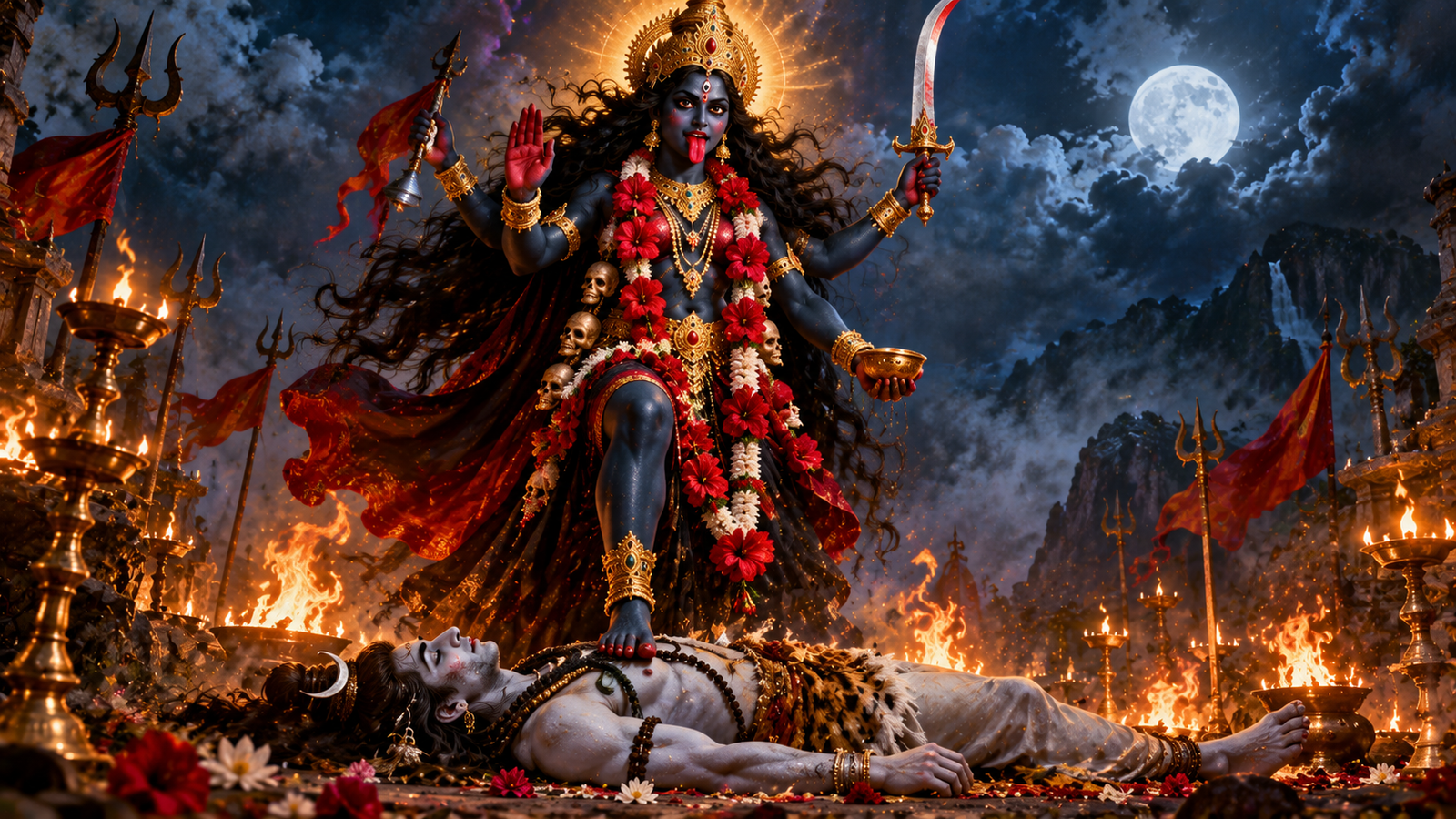
Kali is the fierce dark goddess of time, death and liberation, a form of the great Goddess and the first of the ten Mahavidyas of Tantra. Born from Durga's wrath to slay the demon Raktabija, she is depicted blue-black, garlanded with severed heads and dancing on Shiva. Though terrifying, she is adored as the tender Mother, worshipped at Kali Puja and at Kalighat and Dakshineswar.
RoleGoddess of time, death, the destruction of evil and final liberation; the fierce Mother
TraditionShaktism
ConsortShiva
MantraOm Krim Kalikayai Namah
PositionFirst of the ten Mahavidyas
FestivalKali Puja (Kartik Amavasya)
Frequently asked questions
Who is Kali?
Kali is the fierce Hindu goddess of time, death and liberation, a form of the great Goddess and the first of the ten Mahavidyas, worshipped above all as the dark Mother.
Why is Kali black?
Her name comes from kala, meaning both time and black; she is the colour of the limitless night that holds all colours, into which all names and forms dissolve.
Why does Kali stand on Shiva?
In the story her battle-frenzy was stopped only when she stepped on Shiva lying in her path; in Tantra, Shakti (Kali) is the active power dancing upon still consciousness (Shiva).
Why does Kali wear a garland of heads?
The fifty severed heads are the fifty letters of the Sanskrit alphabet, the primal sounds from which the universe is made.
Is Kali the same as Durga or Parvati?
She is a form of the one great Goddess: the concentrated wrath of Durga and the fierce aspect of Parvati, worshipped as a goddess in her own right.
How is Kali worshipped?
Through Kali Puja on the new-moon night of Kartik, red hibiscus offerings, the mantra Om Krim Kalikayai Namah, and devotion on Tuesdays and Saturdays, especially in the Shakta and Tantric traditions.
Sources
- Devi Mahatmya (Markandeya Purana), chapters 7-8 (Kali and Raktabija)
- Kalika Purana and Mahabhagavata Purana
- Karpuradi Stotra; Mahanirvana Tantra
- Shyama Sangeet of Ramprasad Sen and Kamalakanta
- David Kinsley, Hindu Goddesses (1986) and Tantric Visions of the Divine Feminine (1997)
- Wikipedia, "Kali" (accessed Oct 2026)
Read our editorial policy on how scripture, Purana and folk tradition are labelled.